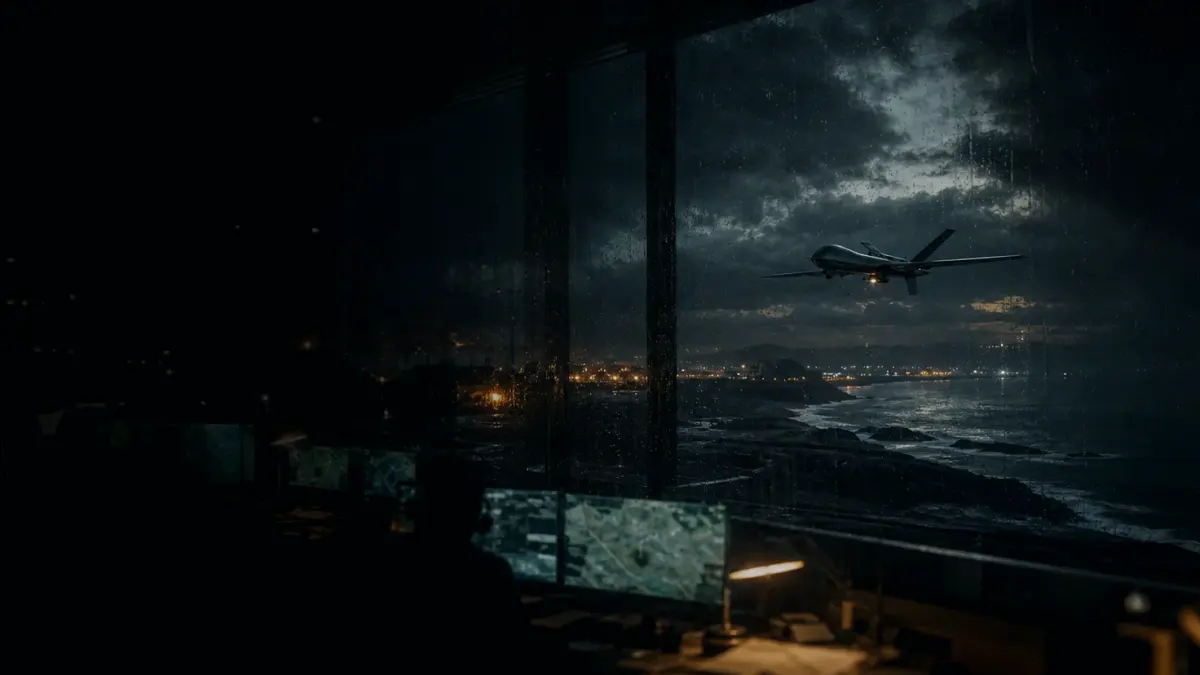
A drone works as an unmanned aircraft: it operates without a pilot on board. It may be remotely piloted or use autonomous functions. The absence of an on-board pilot describes the aircraft itself. Remote piloting and autonomous functions describe possible ways that its flight can be directed, while the details of that arrangement depend on the system concerned.
An unmanned aircraft system includes the aircraft and the equipment used to control it remotely. FAA terminology describes three core elements: the unmanned aircraft, a control station and a data link. Within that control equipment, a command unit supports remote control or monitoring during flight. Other associated equipment varies by system. The three named elements provide the high-level structure, and the associated equipment around that structure is specific to the system being described.
How remote control reaches the aircraft
For remote piloting, the pilot works through the control station rather than from inside the aircraft. The command unit supports the control or monitoring activity, and the data or control link connects that activity with the unmanned aircraft during flight. The station is where the remote work is carried out, the link provides the connection and the aircraft is the element that flies.
The exact control and navigation arrangement depends on the aircraft system. The particular design determines its implementation. A command unit can be described by its control or monitoring role, and a link by the connection it provides. Associated equipment can also differ, with the system-specific arrangement determining how the named elements support control and navigation.
Control choices and propulsion
Propulsion and control arrangements vary by aircraft. FAA guidance gives propellers, rotors and ducted fans as examples of propulsion. Those examples concern how the unmanned aircraft is propelled. The control station, command unit and link concern how flight is directed or monitored from outside the aircraft. Keeping the two jobs separate prevents a propulsion example from being treated as part of the remote-control path.
The option of remote piloting or autonomous functions belongs within that design-specific control picture. In the remotely piloted case, the high-level path runs through the pilot’s control equipment and the link. Where autonomous functions are used, they may form part of unmanned flight, while the exact control and navigation arrangement still depends on the aircraft system.
Two unmanned aircraft can therefore fit the same high-level UAS terminology while differing in associated equipment, control and navigation arrangement, and propulsion. The common terms identify the aircraft, the remote-control side and the connection between them. Control and navigation, associated equipment and propulsion are separate design-specific parts of that description. The particular system supplies the remaining detail, including which propulsion example and which operating arrangement apply to that aircraft.