Quick Answer
A helicopter is an aircraft that achieves lift and propulsion through one or more rotating blades – the main rotor – mounted on a vertical mast. Unlike fixed‑wing aircraft, a helicopter can take off and land vertically, hover in place, and manoeuvre in tight spaces, making it uniquely suited to a wide range of tasks from emergency medical evacuation to covert extraction.
Why the Topic Matters
In the world of espionage and political intrigue, the ability to move silently and appear or disappear at will is a decisive advantage. Helicopters provide that capability, allowing operatives to bypass ground obstacles, reach remote locations, and conduct rapid insertions or exfiltrations. Their versatility also means they can be used for surveillance, transport of sensitive cargo, or as a platform for specialised equipment. Understanding what a helicopter is, and how it operates, is therefore essential for anyone interested in the mechanics of covert action or the stakes that drive the narratives of a thriller such as The Collision of Tides.
Public, Non‑Operational Contexts
Outside the shadows of intelligence work, helicopters are a familiar sight in everyday life. They are employed by:
- Emergency services – ambulance, fire, and police helicopters provide rapid response to accidents, natural disasters, and medical emergencies.
- Search and rescue – maritime and mountain rescue teams use helicopters to locate and evacuate people in inaccessible terrain.
- Transport and logistics – cargo helicopters move goods between islands or across difficult terrain where road access is limited.
- Tourism and leisure – scenic flights offer panoramic views of coastlines, cities, and countryside.
- Construction and maintenance – aerial rigging and inspection of tall structures such as bridges and wind farms rely on helicopter platforms.
These everyday uses illustrate the helicopter’s adaptability and the public’s reliance on its unique capabilities. Yet, the same attributes that make helicopters valuable in civilian life also render them potent tools in the clandestine world of espionage.
Connection to The Collision of Tides
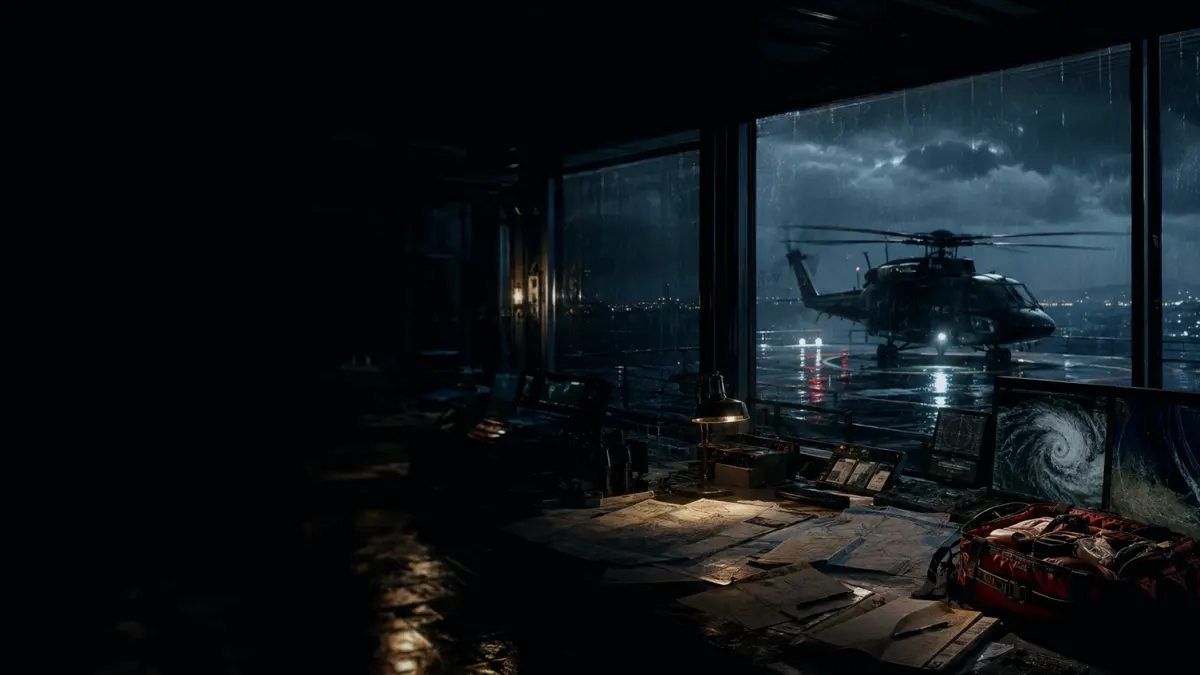
For readers of The Collision of Tides, the helicopter is more than a vehicle; it is a symbol of the thin line between safety and danger, visibility and secrecy. The series frequently explores how the presence of a helicopter can shift the balance of power: a single flight can expose a covert operation, or, conversely, provide the only escape route from a hostile environment. The tension that arises when a helicopter’s rotor blades slice through the night sky mirrors the political pressure and moral ambiguity that drive the narrative, reminding readers that every action has a cost and every decision can ripple across international waters.
Stakes, Tension, and Story Implications
When a helicopter is involved in a covert operation, several high‑stakes factors come into play:
- Visibility – Even a quiet rotor can attract attention from radar, visual observers, or automated detection systems. A misstep can expose an entire network of agents.
- Reliability – Mechanical failure in the middle of a mission can lead to catastrophic loss of life or compromise sensitive material.
- Political fallout – A helicopter crash or hijacking can trigger diplomatic incidents, especially if it occurs near a sovereign border or within contested waters.
- Human cost – The decision to use a helicopter often involves weighing the lives of crew against the strategic value of the mission, a moral dilemma that resonates throughout the series.
These stakes create a palpable tension that keeps readers on edge, as each rotor spin could be the turning point between triumph and tragedy.
Common Misconceptions
Despite their ubiquity, helicopters are sometimes misunderstood:
- “Helicopters are just small planes.” While both are aircraft, helicopters generate lift through rotating blades, not through forward motion alone.
- “They can only fly in clear weather.” Modern helicopters are equipped with advanced avionics that allow them to operate in a range of weather conditions, though extreme turbulence or icing can still pose risks.
- “They are always noisy.” Rotor noise is inherent, but newer designs and operational techniques can minimise the acoustic signature.
- “They are only used for emergencies.” Helicopters serve a broad spectrum of roles, from commercial transport to scientific research.
FAQ
What is the difference between a helicopter and a fixed‑wing aircraft?
A helicopter uses one or more rotating blades to generate lift and propulsion, allowing vertical take‑off, landing, and hovering. A fixed‑wing aircraft relies on forward motion over its wings to create lift and requires a runway for take‑off and landing.
Can helicopters fly in bad weather?
Modern helicopters are designed to operate in a variety of weather conditions, including rain, wind, and low visibility. However, severe turbulence, icing, or extreme storms can limit safe flight operations.
What is a rotor?
The rotor is the main set of blades that spins around a vertical mast, producing lift. A smaller set of blades, called the tail rotor, counteracts the torque produced by the main rotor and stabilises the aircraft.
How do helicopters land?
Helicopters land by reducing rotor speed and forward velocity, then lowering the main rotor blades to a low pitch. The pilot then gently descends, aligning the aircraft with the landing surface and touching down with the main rotor blades first.
What is a helicopter’s role in maritime operations?
In maritime contexts, helicopters are used for search and rescue, cargo transfer between ships, aerial surveillance of sea lanes, and rapid response to incidents such as oil spills or piracy threats.