Quick Answer
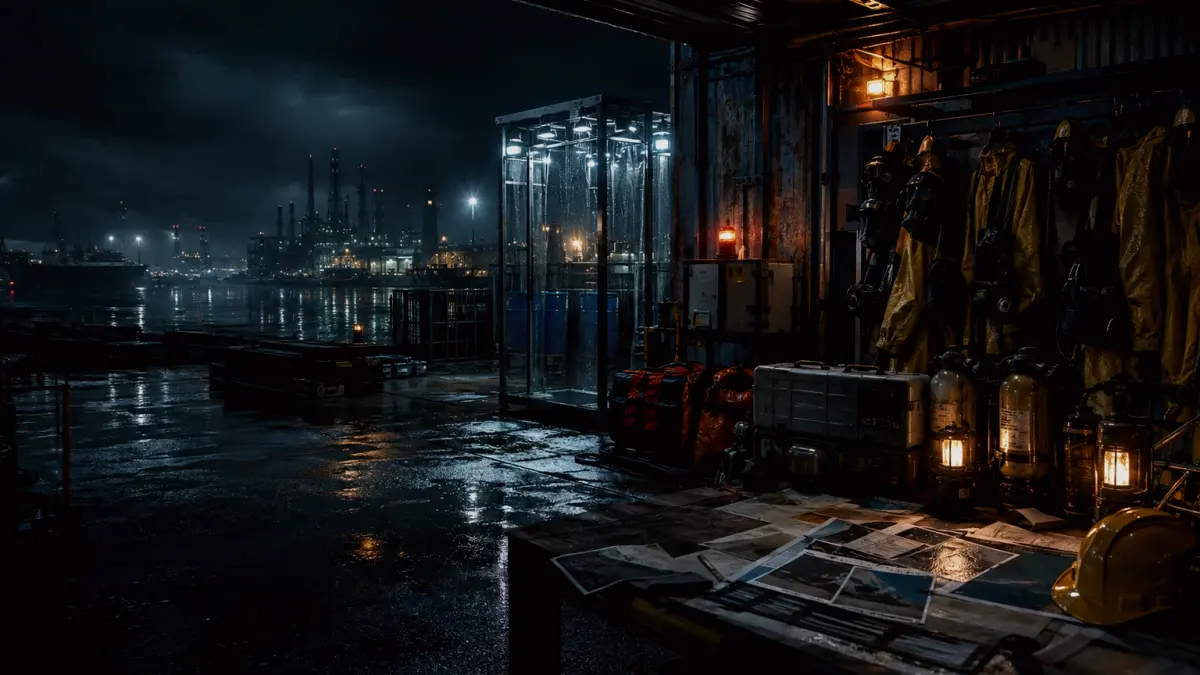
Protective equipment for CBRN (Chemical, Biological, Radiological and Nuclear) threats is a layered set of gear designed to shield the wearer from hazardous agents. It typically includes a full‑body suit, a self‑contained breathing apparatus, eye and face protection, gloves, boots, and a decontamination system. The equipment is chosen to match the specific type of threat and the operational environment.
Why It Matters
CBRN threats are invisible, persistent and can spread rapidly. In a world where political intrigue and covert operations intersect with maritime risk, the ability to survive a chemical or biological attack can determine whether an investigation succeeds or collapses. Protective gear is the first line of defence against agents that can incapacitate or kill without warning, and its effectiveness can be the difference between a mission’s success and a national crisis.
Public Contexts
Outside the realm of espionage, CBRN protective equipment is used in a range of public settings:
- Industrial safety – workers in chemical plants, waste treatment facilities and research laboratories wear specialised suits and respirators to prevent accidental exposure.
- Emergency services – firefighters, paramedics and police officers are trained to don protective gear when responding to incidents involving hazardous substances.
- Military training – armed forces conduct exercises that simulate CBRN scenarios, using full‑body suits and breathing apparatus to prepare personnel for potential attacks.
- Public health and research – laboratories that handle pathogens or radioactive materials employ protective clothing and decontamination protocols to safeguard staff and the environment.
Connection to The Collision of Tides
For Collision of Tides readers, the theme of secrecy and the moral cost of protection resonate strongly. The series explores how governments and organisations conceal the true nature of threats, while ordinary people bear the consequences. Protective equipment becomes a symbol of the invisible barriers that separate those who can act from those who must survive. The tension of a covert operation unfolding on a high‑speed vessel, with the crew suddenly exposed to a chemical plume, mirrors the stakes of real‑world CBRN incidents and amplifies the narrative’s sense of urgency.
Stakes & Tension
When a covert team is exposed to a CBRN agent, the stakes rise beyond personal safety. The integrity of an investigation, the stability of international relations, and the lives of civilians can all hinge on whether the protective gear performs as intended. A failure in the equipment can lead to a cascade of events: compromised evidence, loss of trust in official narratives, and a surge of public pressure demanding accountability. The moral dilemma of choosing between risking exposure to protect evidence or preserving life adds a layer of psychological tension that enriches the thriller’s atmosphere.
Common Misconceptions
Many people assume that CBRN protective gear is a single, all‑purpose solution. In reality, the design of suits, respirators and other components is highly specialised for the type of agent and the operational context. Another misconception is that protective equipment can be used by anyone without training; proper donning, doffing and decontamination procedures are essential to avoid secondary contamination. Finally, some believe that once a suit is on, the wearer is fully protected for an indefinite period; in practice, exposure limits, material degradation and the need for fresh air impose strict time constraints.
FAQ
What types of protective gear are used for CBRN threats?
Typical gear includes a full‑body suit that covers the torso, arms and legs; a self‑contained breathing apparatus (SCBA) that supplies filtered air; eye and face protection such as goggles or face shields; gloves and boots that are resistant to chemical penetration; and a decontamination system for removing agents after exposure.
How is protective equipment selected for a particular threat?
Selection depends on the agent’s properties (chemical, biological, radiological or nuclear), its mode of transmission, and the environment in which the wearer operates. For example, a chemical agent that evaporates quickly may require a suit with a tight seal and a respirator with a high‑efficiency filter, whereas a biological agent might necessitate a suit that resists penetration by pathogens and a respirator that filters out aerosols.
Can civilians use CBRN protective gear?
Civilian use is generally limited to specialised roles such as emergency responders, industrial workers or researchers. The gear is expensive, requires training and is not designed for everyday use. In emergency situations, civilians may be instructed to seek shelter or use improvised protection, but they are not expected to don full CBRN suits.
What is the difference between chemical and biological protection?
While both types of protection rely on barrier suits and respirators, chemical protection focuses on preventing the penetration of toxic substances that can cause burns or systemic poisoning. Biological protection emphasises preventing the entry of pathogens that can cause infection. The filters and materials used in respirators differ accordingly, and the decontamination procedures may also vary.
How long can a protective suit be worn before it must be replaced or decontaminated?
The duration is governed by the suit’s material integrity, the agent’s potency, and the wearer’s physiological limits. In most operational guidelines, a suit is used for a limited number of hours—often between one and four—before it must be inspected, decontaminated or replaced to maintain effectiveness and safety.