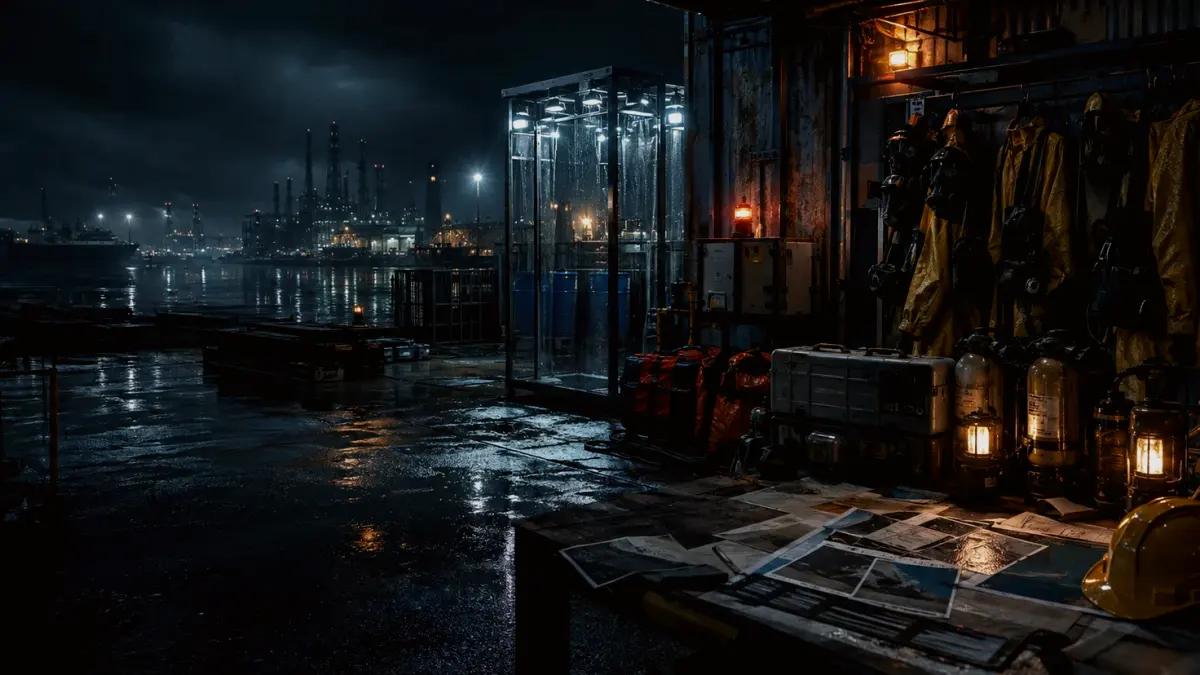
Shipboard firefighting is the organised fire-safety framework maintained aboard a vessel. SOLAS chapter II-2 addresses fire prevention, detection, containment, extinction, escape and access for firefighting aboard ships. The scope begins before a fire is found and continues through controlling it, moving safely away from danger and preserving access for responders. Because escape and firefighter access sit alongside prevention and fire control, the framework addresses both the hazard and the routes people need during the response.
SOLAS requires operational readiness and maintenance of fire-safety measures, plus instructions, onboard training and drills. Readiness and maintenance keep the measures available; instructions explain the shipboard arrangements; training prepares people to use them; and drills exercise that preparation. These responsibilities connect the condition of the fire-safety measures with the knowledge and rehearsal of the people who will use the shipboard arrangements.
How preparation becomes an organised response
Ships and their operating companies maintain emergency-response procedures. Operational readiness concerns the fire-safety measures available aboard the vessel, while instructions, training and drills prepare people to work with those measures. The procedures give equipment readiness and crew preparation a common organisational setting. In practice, they are where the instructions and rehearsal meet the fire-safety measures kept ready for use.
The SOLAS aims address different parts of the same problem. Prevention and detection support action before or when a fire is found; containment and extinction address control of the fire. Escape provides a way away from danger, while access allows firefighters to reach the area where their response is needed. Keeping both directions available is part of the shipboard framework. Containing or extinguishing the fire does not remove the continuing need for escape and firefighter access.
When dangerous goods are involved
For a dangerous-goods fire, the IMO says the shipboard emergency plan and the cargo-specific Emergency Schedule guide the response. The emergency plan provides the vessel’s established response framework, while the applicable schedule adds guidance tied to the dangerous goods involved. This lets a prepared crew use cargo-specific information within the ship’s maintained emergency arrangements. Training and drills also prepare the crew to use the plan and applicable schedule together.