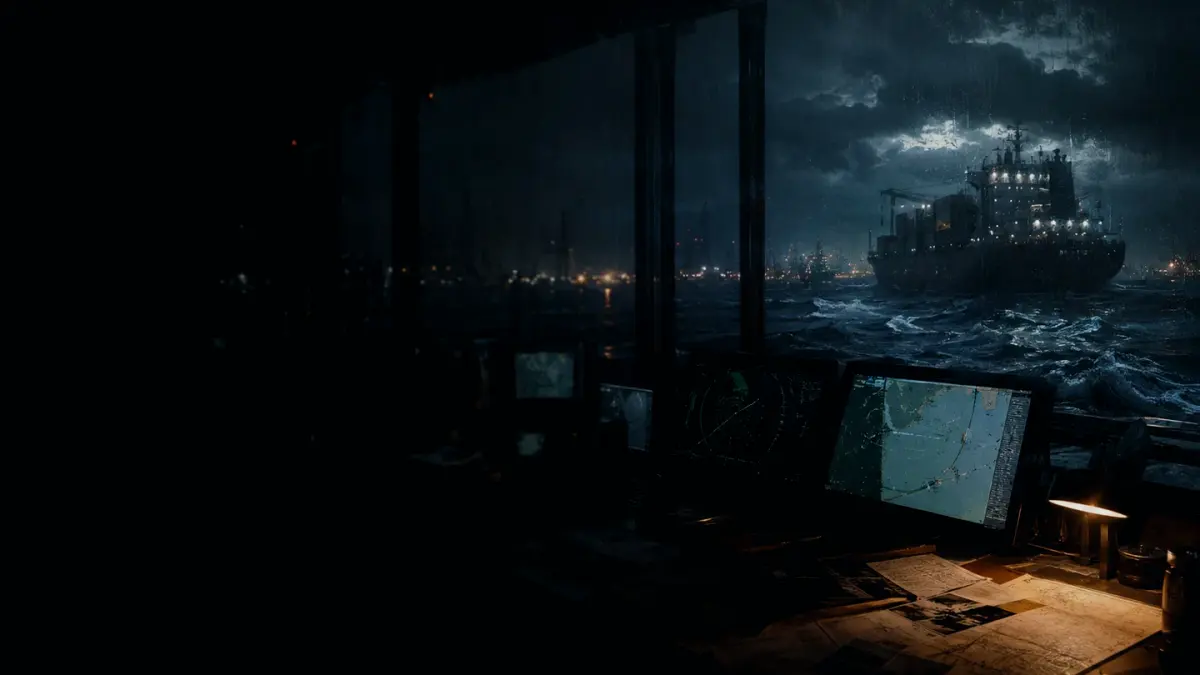
A missing AIS target does not prove a vessel is hidden or gone. It may result from carriage gaps, permitted switch-offs, VHF range limits, or equipment faults. A graphical display shows a lost-target symbol at the last known position when reports cease. AIS signal loss does not prove concealment, as a missing target may simply reflect equipment limitations rather than a dark vessel.
Not every vessel carries AIS, and fitted units may be switched off in limited circumstances, so the system does not present a complete traffic picture. Shipborne AIS works within VHF/FM range; typical values depend on antenna height, while repeaters can extend coverage and local conditions affect reception. If AIS detects its own malfunction, the built-in integrity test provides an alarm and the unit should stop transmitting; a failed or absent connected sensor can instead produce a not-available data value.
The absence of an AIS target does not establish the absence of a vessel; lookout, radar and all other safety-relevant information remain necessary. Corroboration through other navigational aids is essential for accurate situational awareness.