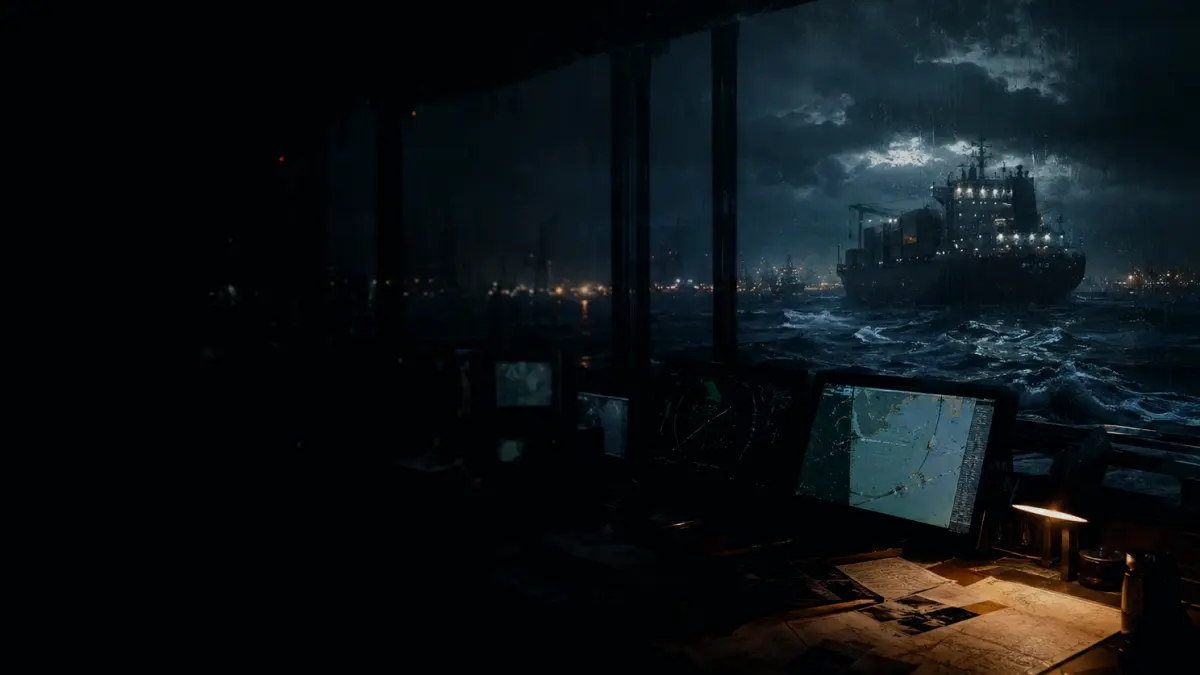
An AIS transponder exchanges data automatically over a VHF link. It sends its vessel's data and receives messages originating from other ships, vessel traffic service stations and other AIS stations.
The information may appear on the unit's minimum display or be supplied to radar, ECDIS and other navigation displays. Those presentations supplement rather than displace lookout, radar and the other safety information available to the bridge.
Two dedicated VHF channels carry AIS traffic. Time-division access lets participating stations share that link, with the current technical characteristics set out in ITU-R M.1371-6. Equipment class also matters: Class A and Class B differ in capability and reporting behaviour, and Class B need not include every function required of Class A.