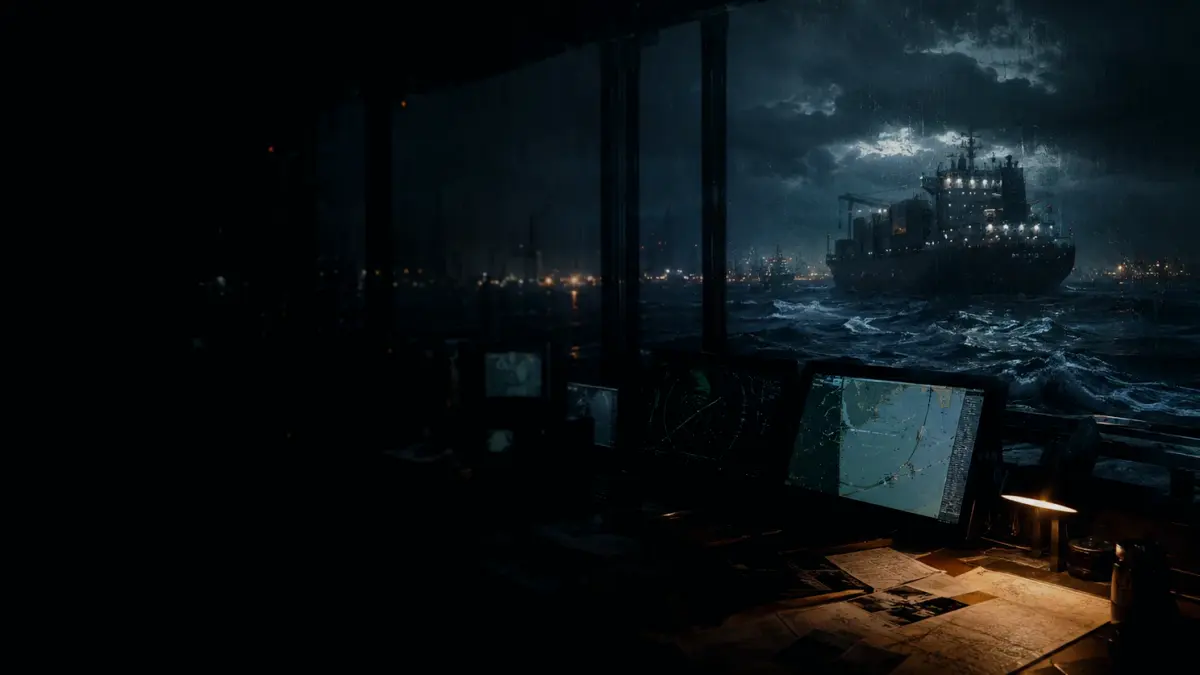
Bridge teams cross-check AIS against radar for accuracy.
AIS receives data broadcast by participating stations, whereas radar target information is measured by own ship's radar; consequently, each system builds its target picture independently. An AIS target position originates from the target's electronic position-fixing receiver and may not align exactly with the physical target detected by radar. Furthermore, a vessel or object may appear on radar without AIS because not all targets carry or operate AIS, while AIS can sometimes show a target that is obscured in a radar shadow area.
AIS adds identity and target-supplied motion information, while radar plotting supplies own-ship measurements of relative target motion; integrated displays may associate the two only when position and motion criteria are met. MCA and IMO guidance require AIS to supplement systematic visual and radar observation and warn against giving AIS priority for collision-avoidance decisions.