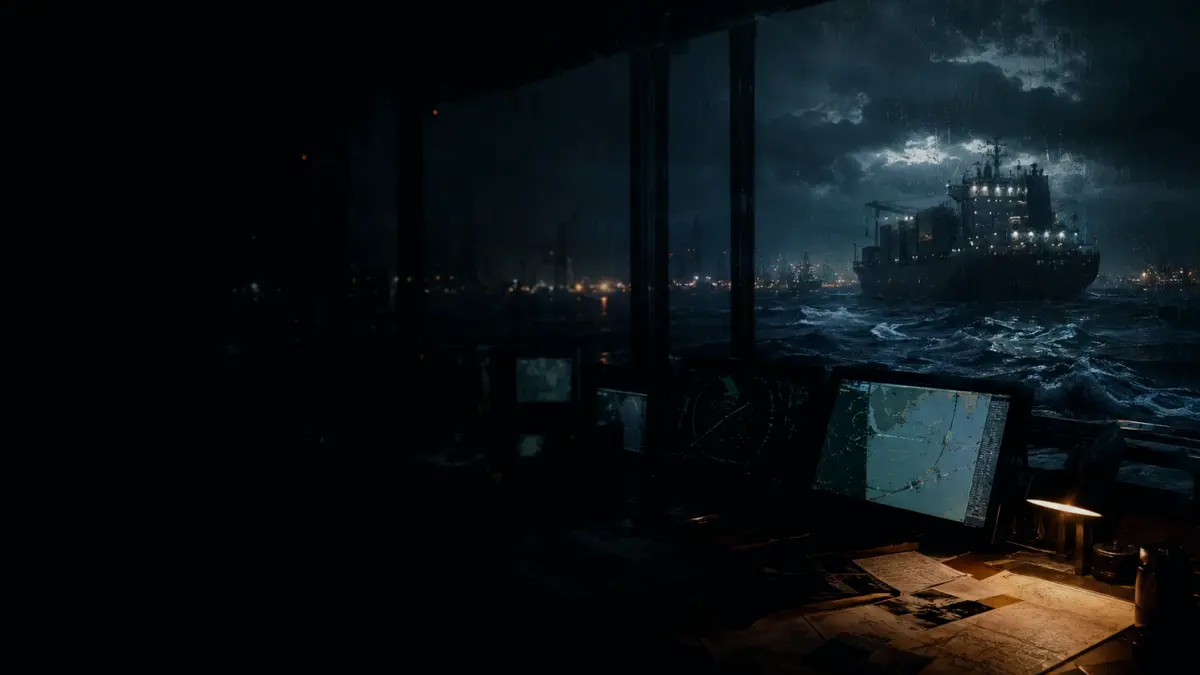
If AIS is unavailable or wrong, use radar and visual lookout instead of relying on it. This response ensures safety by acknowledging that AIS targets may be incomplete, incorrect, or entirely missing due to equipment limitations or intentional disengagement.
AIS position and motion are supplied by the target's own equipment, whereas radar provides measurements relative to the own-ship; these sources frequently disagree and require cross-checking. The built-in integrity test can report equipment malfunction but does not validate the accuracy of connected sensor data, meaning routine checks and corroboration remain necessary for reliable situational awareness.
Not all ships carry AIS, fitted units may be switched off in limited safety or security circumstances, and received data may be incomplete, unavailable or wrong. Consequently, assumptions about unseen or unidentified traffic must be avoided, as the system does not prevent collisions by itself and does not replace visual lookout, radar plotting, use of all available means or compliance with the COLREG.