Quick Answer
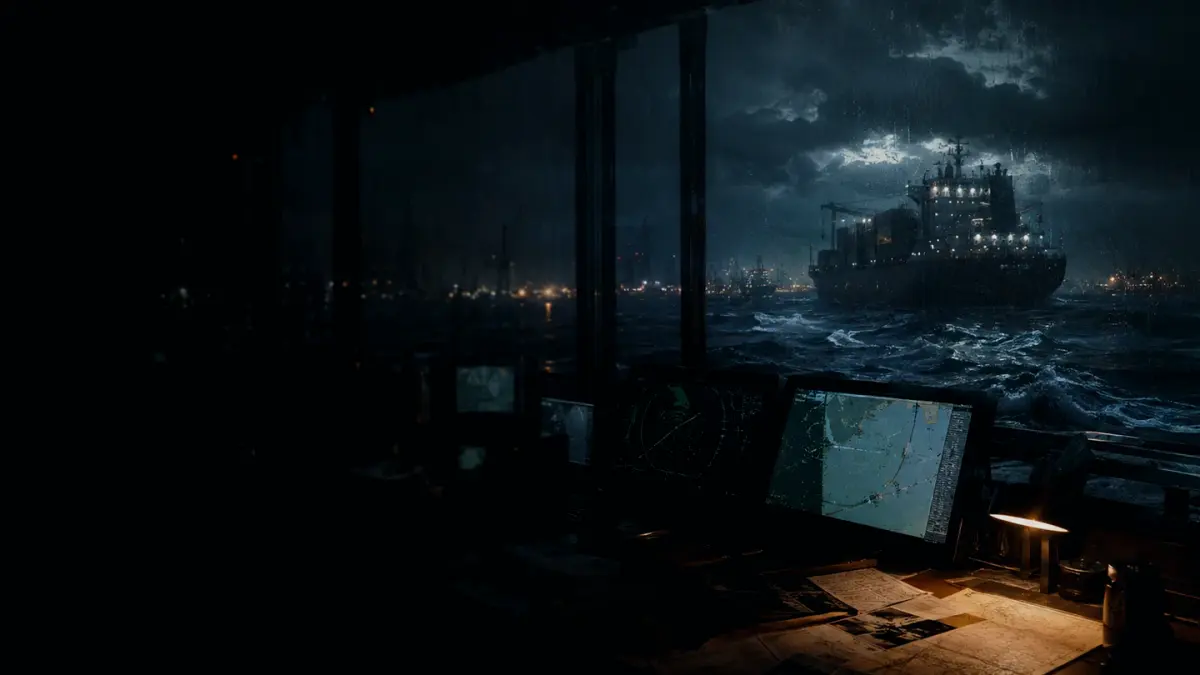
Radar track evidence is the visual record of a vessel’s position, speed and heading over time, captured by a ship’s or shore‑based radar system. It appears as a series of dots or a continuous line on a radar display, and can be archived for later review by investigators, regulators or intelligence analysts.
What Radar Track Evidence Is
When a radar system emits radio pulses, the returned echoes are processed into a map of objects in the surrounding water. Each pulse that returns from a target is plotted as a point on the radar screen. By repeating this process every few seconds, the system builds a time‑stamped trail that shows how a vessel moves. The trail can be exported as a file or printed, preserving the sequence of positions for post‑incident analysis.
Why It Matters
In maritime safety, radar track evidence can prove whether a ship was following a safe course, whether it was in collision range, or whether it deviated from its declared route. For regulators, it is a key tool in enforcing navigation rules and in investigating incidents such as groundings, collisions or suspicious behaviour. In intelligence or political contexts, the same data can reveal patterns of movement that hint at covert activity, smuggling or state‑backed operations.
Radar Track Evidence in Maritime and Investigation
Regulatory bodies routinely review radar tracks when a vessel is flagged for a safety breach. The evidence can show whether a ship was manoeuvring correctly, whether it maintained required distances, or whether it failed to comply with traffic separation schemes. In accident investigations, the track is compared with other sources – AIS data, eyewitness accounts, and video footage – to reconstruct the sequence of events.
From an investigative perspective, radar tracks can expose anomalies: sudden changes in heading, unexplained stops, or repeated patterns that suggest a vessel is following a predetermined route. Such patterns can raise questions about the vessel’s true purpose, especially when the ship is registered in a country with lax oversight or when it operates in politically sensitive waters.
Thematic Connection to Collision of Tides
For readers of Collision of Tides, radar track evidence represents the thin line between transparency and secrecy. The series often portrays how a single piece of data – a line on a screen – can shift the balance of power, expose hidden agendas or become the catalyst for a political crisis. The stakes are high: a misinterpreted track can lead to wrongful accusations, while a carefully concealed trail can allow illicit activity to slip past regulators. The moral cost of hiding or manipulating such evidence is a recurring theme, echoing the series’ focus on the human toll of secrecy.
Common Misconceptions
- Radar tracks are always accurate. While radar is a reliable tool, factors such as sea state, weather, and equipment ageing can introduce errors.
- Radar data alone can prove intent. Intent is inferred from context; radar tracks must be combined with other evidence.
- All vessels are required to keep radar logs. The requirement varies by flag state and vessel type; some smaller craft may not have the same obligations.
- Radar tracks are public. In many jurisdictions, archived radar data is confidential and only accessible to authorised investigators.
FAQ
What is the typical time interval between radar pulses that create a track?
Radar systems usually emit pulses every few seconds, producing a point on the screen each time. The exact interval depends on the system’s design and the required resolution for the task at hand.
Can radar track evidence be used to prove a collision occurred?
Yes, when combined with other data such as AIS, eyewitness testimony and physical evidence, a radar track can help establish the relative positions and movements of vessels at the time of an incident, supporting conclusions about a collision.
Is radar track evidence admissible in court?
In many jurisdictions, archived radar data is considered admissible evidence, provided it has been preserved correctly and can be authenticated by a qualified expert.
How does radar track evidence differ from AIS data?
Radar track evidence is self‑reported by the radar system itself, showing where the radar detects a target. AIS data is voluntarily transmitted by vessels and includes information such as name, position, speed and heading. The two sources complement each other but are distinct.
What happens if a vessel’s radar fails during an incident?
In the event of a radar failure, investigators rely on other sources such as AIS, satellite imagery, and survivor accounts to reconstruct the vessel’s movements. The absence of radar data can complicate the investigation but does not preclude it.