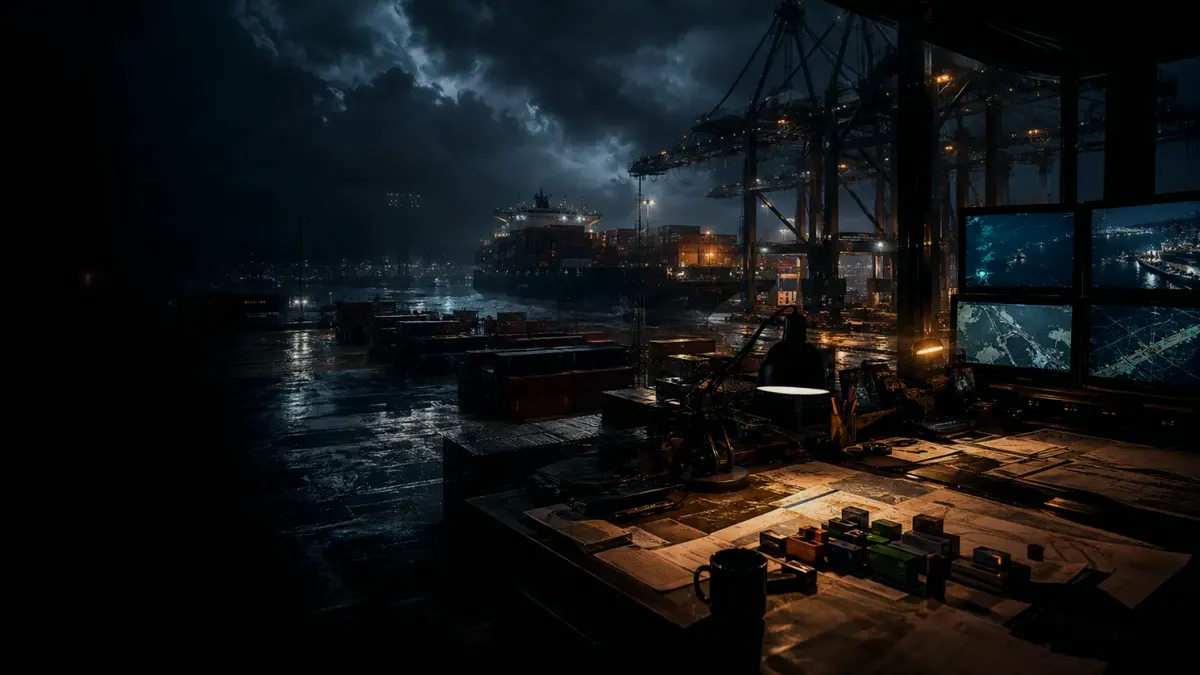
What Is a Container Ship?
Quick answer: A container ship is a large commercial vessel designed to carry standardised cargo containers. These ships stack containers in a precise, interlocking arrangement, allowing rapid loading and unloading at ports worldwide. Their size, speed and efficiency make them the backbone of global trade.
Why the Topic Matters
Container ships are more than just floating warehouses; they are the arteries of the global economy. Each vessel can carry thousands of containers, each holding goods from a single manufacturer to a consumer in a distant country. The movement of these containers underpins everything from the smartphones in your pocket to the food on your table. Understanding how they operate provides insight into the scale of international commerce, the logistics of supply chains, and the vulnerabilities that can be exploited in a world where secrecy and pressure often collide.
Public, Non‑Operational Contexts
In everyday life, container ships appear in a few familiar ways:
- Port infrastructure: Modern harbours are equipped with gantry cranes and roll‑on/roll‑off berths specifically designed for container handling. The layout of a port can reveal the volume of trade it supports.
- Shipping schedules: Publicly available timetables and berth allocations give a sense of the rhythm of maritime traffic. Shipping companies publish their itineraries, and port authorities provide arrival and departure data.
- Environmental monitoring: Satellite imagery and AIS (Automatic Identification System) data allow the public to track the movement of large vessels, providing transparency about shipping routes and potential environmental impacts.
- Economic indicators: Trade statistics, such as the volume of goods transported by container ships, are key metrics for economists and policymakers when assessing the health of global markets.
These contexts illustrate how container ships are woven into the fabric of modern life, yet they remain largely invisible to the average person.
Connection to The Collision of Tides
For readers of The Collision of Tides, the container ship represents a perfect backdrop for themes of secrecy, pressure, and moral cost. The sheer scale of these vessels means that a single incident—whether a cargo theft, a covert delivery, or a political scandal—can ripple across continents, affecting governments, businesses and ordinary citizens alike. The series’ focus on espionage and political intrigue finds a natural ally in the world of container shipping, where the movement of goods can be a conduit for information, influence and, at times, illicit activity.
Stakes, Tension, and Story Implications
When a container ship becomes the centrepiece of a covert operation, the stakes multiply:
- Economic impact: A disruption can halt supply chains, inflate prices and trigger market volatility.
- Political leverage: Control over a vessel or its cargo can be used to pressure governments or to secure diplomatic concessions.
- Security risk: High‑value or sensitive cargo—such as advanced technology or classified documents—can be targeted by hostile actors.
- Human cost: Crew safety, environmental damage and the welfare of communities along shipping routes can be compromised.
These layers of consequence create a fertile ground for tension. A single misstep—an overlooked security protocol, a misdirected shipment or a misinterpreted signal—can set off a chain reaction that escalates from a quiet corporate dispute to an international crisis.
Common Misconceptions and Reader Questions
Many people assume that container ships are simply large cargo vessels. In reality, their design, operation and strategic significance are far more complex:
- “Do all cargo ships carry containers?” No. While container ships dominate bulk trade, other vessels—such as bulk carriers, tankers and roll‑on/roll‑off ships—carry different types of cargo.
- “Are container ships only used for goods, not people?” Correct. Container ships are strictly for freight; passenger transport is handled by dedicated vessels.
- “Can a single container ship carry a whole country’s supply?” No. Even the largest container ships carry a fraction of a nation’s annual imports or exports.
- “Is the movement of containers fully transparent?” While AIS and port data provide visibility, the details of cargo contents and ownership can remain confidential, creating opportunities for covert activity.
FAQ
What is the typical size of a container ship?
Container ships are measured in TEU (Twenty‑foot Equivalent Units). Modern vessels range from around 2,000 TEU for smaller feeder ships to over 20,000 TEU for the largest super‑containers that can carry more than 20,000 standard containers.
How are containers secured on a ship?
Containers are stacked in a precise grid and secured with twist locks, lashing straps and, in some cases, hydraulic restraints. The arrangement ensures stability during transit and allows rapid loading and unloading at ports.
What role does AIS play for container ships?
Automatic Identification System broadcasts a vessel’s position, speed, heading and basic identity information. For container ships, AIS data helps port authorities manage berths, assists in collision avoidance and provides a public record of the vessel’s movements.
Can container ships be used for covert operations?
Because container ships transport large volumes of goods, they can serve as cover for the movement of sensitive items. The anonymity of cargo manifests and the sheer scale of operations can mask illicit or clandestine activities.
What environmental concerns are associated with container ships?
Container ships emit greenhouse gases, sulphur oxides and particulate matter. International regulations, such as the IMO 2020 sulphur cap, aim to reduce emissions, but the environmental footprint remains significant due to the size and frequency of these vessels.