Quick Answer
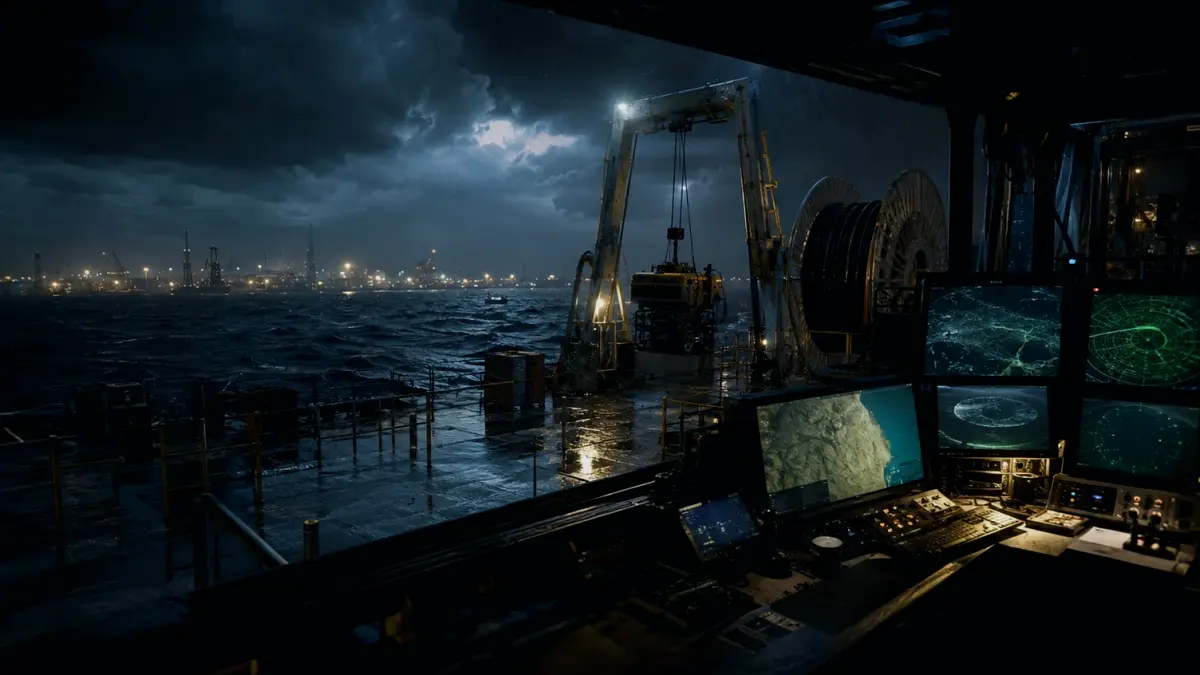
A Remotely Operated Vehicle (ROV) is a tethered underwater platform that is controlled from a surface vessel or shore‑based station. It carries cameras, manipulators, and scientific instruments, allowing operators to inspect, repair or survey subsea structures and environments without sending divers into potentially hazardous waters.
Why the Topic Matters
ROVs sit at the intersection of technology, commerce and national security. They enable:
- Inspection of offshore oil rigs, pipelines and wind farms, safeguarding critical infrastructure.
- Hydrographic surveys that chart seabed topography for navigation, shipping lanes and submarine cable routes.
- Scientific research into marine ecosystems, climate change and deep‑sea geology.
- Recovery operations for lost cargo or unexploded ordnance.
Because they can access places that are otherwise unreachable, ROVs become a double‑edged sword: they can expose hidden threats or, conversely, conceal illicit activity beneath the waves.
Public, Non‑Operational Contexts
In the public eye, ROVs are most often seen in documentaries about deep‑sea exploration, in news reports covering offshore accidents, or in academic papers on marine biology. They are also featured in popular science shows that showcase the latest in underwater robotics. These depictions focus on the awe of seeing the ocean’s depths, the precision of the instruments, and the skill of the operators, rather than on any covert capabilities.
Connection to The Collision of Tides
For readers of The Collision of Tides, the ROV represents a silent witness to the undercurrents of political intrigue. The series’ themes of secrecy, pressure and the human cost of hidden agendas find a natural ally in the ROV’s ability to reveal or conceal evidence beneath the surface. Whether the vehicle is used to document a clandestine pipeline, to recover a lost artefact, or to monitor a disputed maritime zone, its presence adds a layer of tension: the knowledge that something unseen could be exposed at any moment, or that the data it gathers could be weaponised in a diplomatic showdown.
Stakes, Tension and Story Implications
When an ROV is deployed, several stakes rise:
- Safety – The vehicle’s tether can snag on debris, and a sudden loss of power can leave operators scrambling to recover the craft.
- Evidence – Footage captured by an ROV can be the decisive proof in an international dispute or a court case, but it can also be edited or misrepresented.
- Political Consequence – Discovering a hidden pipeline or a covert installation can trigger diplomatic protests, sanctions or even military responses.
- Moral Cost – The decision to deploy an ROV into contested waters may involve weighing national interests against environmental stewardship and the rights of local communities.
These stakes create narrative tension: a team of operators might be racing against time to retrieve footage before a rival nation claims ownership, or a government might be forced to decide whether to release sensitive images that could jeopardise national security.
Common Misconceptions
Readers often hold a few incorrect ideas about ROVs:
- They are autonomous. ROVs are tethered and require a human operator to control movements and instruments.
- They are small. While some ROVs are compact, many are large enough to carry heavy equipment and can be several metres in length.
- They are cheap. The cost of building, maintaining and operating an ROV can run into millions of pounds, especially for specialised missions.
- They are only for research. Commercial and military organisations also use ROVs for inspection, maintenance and surveillance.
- They can operate in any water. Depth limits, water temperature, salinity and currents all influence where an ROV can safely work.
FAQ
What is the main difference between an ROV and an autonomous underwater vehicle (AUV)?
An ROV is tethered to a surface vessel and requires a human operator to control it in real time, whereas an AUV operates independently, following pre‑programmed routes and collecting data without a direct link to the surface.
Can an ROV be used for covert surveillance?
While ROVs can capture detailed imagery and sensor data, their tethered nature and the need for a surface platform make covert operation challenging. In fiction, however, the idea of a hidden ROV lurking beneath a contested zone can serve as a powerful narrative device.
What kinds of sensors are typically mounted on an ROV?
Common sensors include high‑definition cameras, sonar arrays, temperature and salinity probes, and manipulator arms for sampling or repair tasks. The exact suite depends on the mission’s objectives.
How long can an ROV stay submerged?
Operational time is limited by the power supplied through the tether and the endurance of onboard systems. Typical missions last from a few hours to a day, but specialised ROVs can remain active for longer periods under controlled conditions.
What safety measures are in place to protect ROV operators?
Operators rely on redundant communication links, real‑time monitoring of tether tension, and emergency recovery protocols. Surface vessels are equipped with winches and winch‑control systems to manage the tether and prevent entanglement.
Are ROVs used in maritime law enforcement?
Yes, law‑enforcement agencies employ ROVs to inspect suspected illegal fishing vessels, investigate maritime accidents, and recover evidence from submerged wrecks, all while minimising risk to human divers.