Quick Answer
A subsea cable is a long, insulated fibre‑optic or electrical cable that is laid on the seabed to transmit data, power or other signals between points on the coast or across oceans. It is the invisible backbone of global communications, energy distribution and scientific research.
What Is a Subsea Cable?
Subsea cables are engineered to survive the harsh marine environment. They are typically made of multiple layers: an inner core of optical fibres or copper conductors, surrounded by protective armour, insulation and a waterproof outer sheath. The cable is buried or laid on the seabed, sometimes with a protective trench, to shield it from fishing gear, anchors and natural hazards.
Two main types exist:
- Telecommunications cables – fibre‑optic strands that carry internet, telephone and broadcast signals across continents.
- Power cables – high‑voltage lines that transmit electricity between offshore wind farms, islands or mainland grids.
How Subsea Cables Are Laid and Maintained
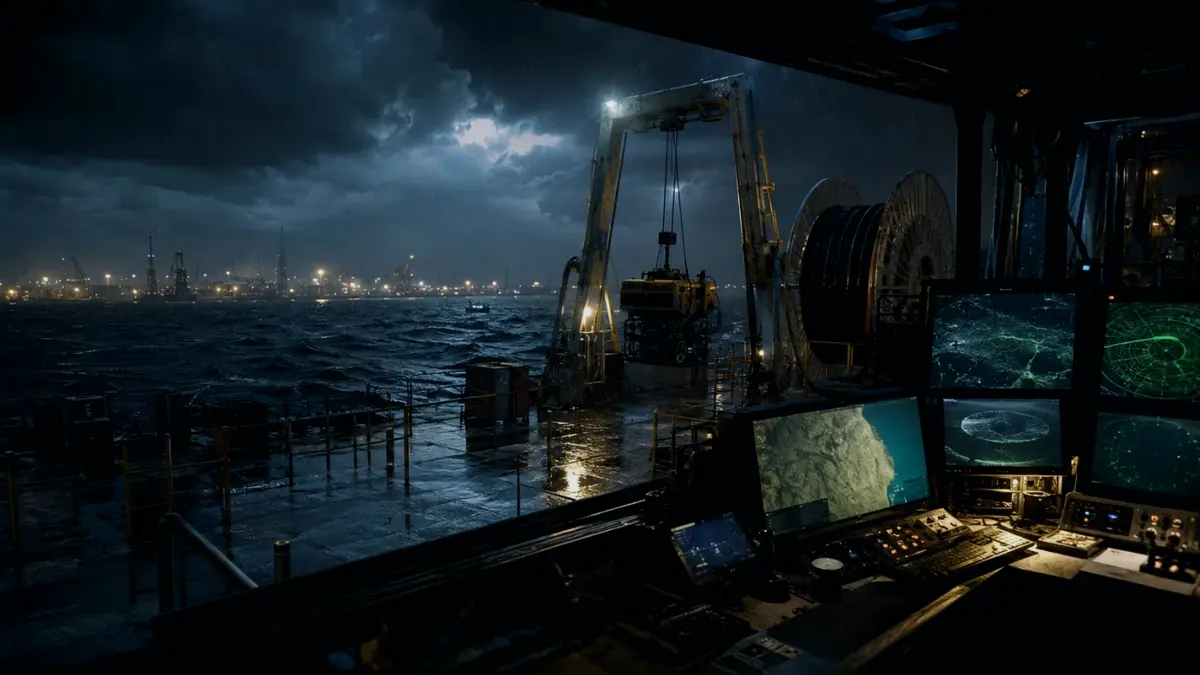
Deployment begins with a survey of the seabed to identify safe routes. A specialised cable‑laying vessel then unspools the cable, keeping it under tension to minimise damage. Once on the seabed, the cable may be buried by a plough or left on the surface, depending on the depth and risk profile.
Maintenance is carried out by cable repair ships equipped with remotely operated vehicles (ROVs) or divers. When a fault is detected, the ship locates the damaged section, cuts it out and splices a new segment in place. The process is expensive and time‑consuming, which makes subsea cables valuable assets that are often protected by insurance and security measures.
Public Contexts and Everyday Relevance
Subsea cables are the unseen arteries that keep the digital world alive. Every email, video call and online transaction relies on a network of these cables. In the energy sector, they enable the transfer of electricity from offshore wind farms to mainland grids, supporting renewable energy targets.
Scientific research also depends on subsea cables. Oceanographic instruments, such as temperature and salinity sensors, transmit data back to shore via fibre‑optic links, allowing real‑time monitoring of climate change and marine ecosystems.
Because of their ubiquity, subsea cables are often mentioned in news stories about natural disasters, piracy, or geopolitical tensions, but the technical details remain largely invisible to the public.
Connection to The Collision of Tides
For readers of The Collision of Tides, subsea cables embody the series’ themes of secrecy, pressure and the hidden costs of modern infrastructure. The cables represent a silent, vulnerable network that can be exploited, damaged or used as leverage in political intrigue. Their maintenance and protection involve a complex web of stakeholders—government agencies, private operators, insurers and international regulators—each with their own agendas and interests.
In a thriller setting, a damaged subsea cable could trigger cascading failures: loss of communication, power outages, or even environmental harm if a cable from an offshore installation is severed. The stakes are high, and the tension rises as different parties race to control the narrative, secure evidence, and mitigate the fallout.
Stakes, Tension and Story Implications
- National security – A breach or sabotage of a critical communications cable could compromise intelligence sharing or military coordination.
- Economic impact – Disruption of data traffic can halt financial markets, affect international trade and cost billions in lost productivity.
- Environmental risk – Damage to cables connected to offshore wind farms or research stations can release pollutants or disrupt marine life monitoring.
- Political leverage – Control over a cable’s route or ownership can become a bargaining chip in diplomatic negotiations or sanctions regimes.
These high‑stakes scenarios create a fertile ground for espionage, covert operations and moral dilemmas, echoing the complex narratives found in The Collision of Tides.
Common Misconceptions
- “Subsea cables are only for internet.” – While most are fibre‑optic, many carry electrical power or specialised scientific data.
- “They are immune to damage.” – Cables can be severed by fishing trawlers, anchors, seismic activity or deliberate sabotage.
- “All cables are buried.” – In shallow waters or where protection is unnecessary, cables may lie on the seabed surface.
- “Repair is quick.” – Locating and fixing a fault can take weeks, especially in deep or remote areas.
FAQ
What is the typical depth at which subsea cables are laid?
Depth varies with the cable’s purpose and route. Telecommunications cables often lie in shallow waters, from a few metres to several hundred metres, while power cables to offshore wind farms can be placed deeper, sometimes exceeding a thousand metres.
How long does it take to lay a new subsea cable?
The time required depends on length, sea conditions and logistical factors. A 1,000‑kilometre cable can take several months to a year from survey to completion.
Are subsea cables monitored for faults in real time?
Many modern cables incorporate monitoring systems that detect changes in signal strength or electrical parameters, allowing operators to identify potential faults early. However, real‑time monitoring is not universal and depends on the cable’s design and the operator’s investment.
Can a single subsea cable failure affect global internet traffic?
Yes. Major cables carry a disproportionate share of trans‑Atlantic or trans‑Pacific traffic. A fault can reroute traffic through alternative paths, potentially causing congestion, latency or temporary outages.
What measures are taken to protect subsea cables from accidental damage?
Routes are chosen to avoid high‑traffic fishing zones, anchor points and known seabed hazards. In some areas, cables are buried or protected by trenching. Operators also maintain detailed maps and coordinate with maritime authorities to mitigate risks.